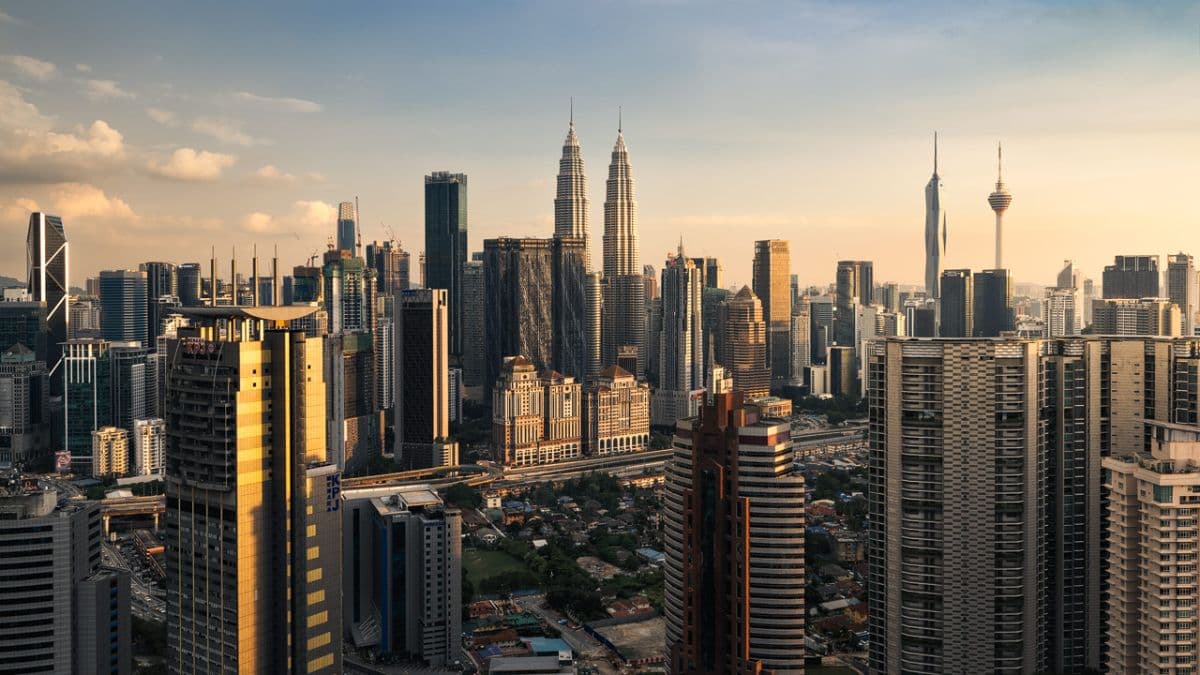
The Great Decoupling: Why Malaysia's RM1m+ Homes Keep Rising as the Wider Market Cools
October 6, 2026 · By Sean Yow
The Quick Take: Total property market volume across Malaysia slipped 4.5% in H1 2026, but high-end transactions above RM1 million rose 2.2%. With Budget 2027 tabling on Friday, October 9, Zeon Properties International breaks down why prime property is behaving like a resilient wealth-preservation asset rather than a cyclical purchase—and what buyers need to know right now.
Key Figures at a Glance
+2.2% — Growth in RM1m+ luxury property transactions in H1 2026
−4.5% — Decline in total market transaction volume in H1 2026
RM5.0 Billion — Property purchases generated by MM2H since its October 2024 relaunch
8% — Flat foreign-buyer stamp duty rate (effective since Jan 1, 2026)
Fri, Oct 9, 2026 — Tabling date for Budget 2027
A Market Moving at Two Speeds
Malaysia’s real estate landscape is no longer moving in unison. In the first half of 2026, overall transaction volume contracted by 4.5%. Yet during that exact same window, deals for properties priced above RM1 million grew by 2.2%.
This divergence is the headline story of the year. While the broader mass market navigates what industry analysts describe as a "cooling phase," the prime segment continues to expand—making it the only sector in real estate to maintain upward momentum.
H1 2026 MALAYSIA PROPERTY MARKET DIVERGENCE
Overall Market Volume : [ -4.5%] 📉
RM1m+ Prime Segment : [ +2.2%] 📈
This trend is not a coincidence of timing. It reflects who is buying at the top end and why. High-net-worth investors aren't chasing quick speculative cycles; they are moving capital into tangible, hard assets that hold value when other markets wobble.
1. Property as a Store of Wealth
At the top tier, buying a home is rarely just a lifestyle upgrade—it is a strategic balance-sheet decision.
Three structural forces explain why prime addresses hold their ground:
Expanding Wealth Pool: Malaysia's ultra-high-net-worth population is projected to grow 20.1% to 1,881 individuals by 2031. This provides steady, structural demand for core addresses like KLCC, TRX, and Damansara Heights.
Growing Market Share: Deals above RM1 million made up 10% of all subsale transactions in H1 2026. With Kuala Lumpur’s average house price sitting at RM1.203 million and the national Malaysian House Price Index up 1.7% year-on-year (to 235.5), price growth remains solid and non-speculative.
Insulation from Interest Rates: Mass-market demand relies heavily on loan approvals and monthly debt-service ratios. Prime buyers operate on wealth allocation strategies. When broader credit conditions tighten, the top end keeps transacting.
2. The International Engine: Visa Capital Turning Into Real Estate
Foreign demand acts as a powerful secondary engine for the luxury segment. Since the Malaysia My Second Home (MM2H) program relaunched in October 2024, it has generated 7,650 applications and RM5.0 billion in direct property sales (part of RM8.85 billion in overall economic contribution).
Buyer Application Breakdown
🇨🇳 Mainland China: 3,847 (50.3%)
🇹🇼 Taiwan: 1,054 (13.8%)
🇭🇰 Hong Kong: 324 (4.2%)
🇸🇬 Singapore: 287 (3.8%)
🇺🇸 United States: 284 (3.7%)
The MM2H Advantage: Property acquisition is mandatory on every tier for mainland applicants. A Gold Pass pairs a US$500,000 fixed deposit with a RM1 million home purchase, unlocking 15 years of residency. Visa capital directly converts into a tangible, high-value asset the buyer owns.
Regional Price Comparison
Kuala Lumpur prime real estate offers a compelling value proposition compared to regional peers:
Market | Prime Price (PSF) | Foreign-Buyer Tax | Approx. All-In Cost (RM / PSF) |
KLCC (Top Branded) | RM 2,300 – 3,500 | 8% Stamp Duty | ~RM 2,480 (at RM2,300 base) |
Singapore CCR (New Launch) | S$ 3,208 (~RM 10,226) | 60% ABSD | ~RM 16,360 |
Even after foreign-buyer taxes, Singapore’s Core Central Region (CCR) costs roughly 6.6 times more per square foot than top branded units in KLCC. Combined with KLCC’s attractive gross rental yields of 3.5%–5.5%, regional capital is increasingly redirecting toward Kuala Lumpur.
3. Budget 2027: Key Points to Watch on October 9
Budget 2027 is the week's primary market catalyst. Economists expect total government allocation to exceed last year's RM419.2 billion. While no specific property measures have been officially signaled yet, housing affordability remains a central focus.
💡WHAT BUYERS SHOULD WATCH IN BUDGET 2027
Foreign-Buyer Levies: January's flat 8% stamp duty shift shows policy parameters can adjust at budget time.
Real Property Gains Tax (RPGT): Foreigners currently pay 30% in Y1-5 and 10% from Y6 onwards, favoring long holdings.
Tourism & MM2H Drive: MOTAC sales missions to HK, Japan and South Korea point to stronger incoming demand.
The Bottom Line: Terms in force today are fully known; terms after Friday may change. Buyers reserving properties before any potential new policy adjustments take effect secure today's conditions.
4. Infrastructure Horizons: Penang & Johor Bahru
The decoupling narrative extends beyond the capital city:
Penang (Mutiara Line LRT): Major civil works are underway. A 322-day traffic diversion along Jalan Sultan Azlan Shah (running through July 2027) marks the start of median piling along the airport–Silicon Island corridor. This 2029–2030 infrastructure milestone will unlock major long-term value for Bayan Lepas, Queensbay, and southern Penang.
Johor Bahru (RTS Link): Pending final safety certification, the cross-border rail link is targeted for February 2027, maintaining cross-border integration and keeping Singaporean buyers focused on southern Malaysia.
The Zeon Takeaway & Buyer Action Plan
Headline drops in overall market volume mask a thriving luxury segment underneath. Backed by domestic wealth creation, residency-driven capital, and significant price advantages over regional peers, prime Malaysian property continues to demonstrate resilience.
Recommended Action Items:
Domestic Buyers: Focus on scarcity-backed, established addresses in KLCC, TRX, and Damansara Heights.
International Buyers: Pair an MM2H visa application with a qualifying prime property purchase, planning for a holding period of at least six years to reach the lower 10% RPGT rate.
Long-Horizon Investors: Consider early entry along Penang’s LRT corridor ahead of the 2029–2030 infrastructure cycle.